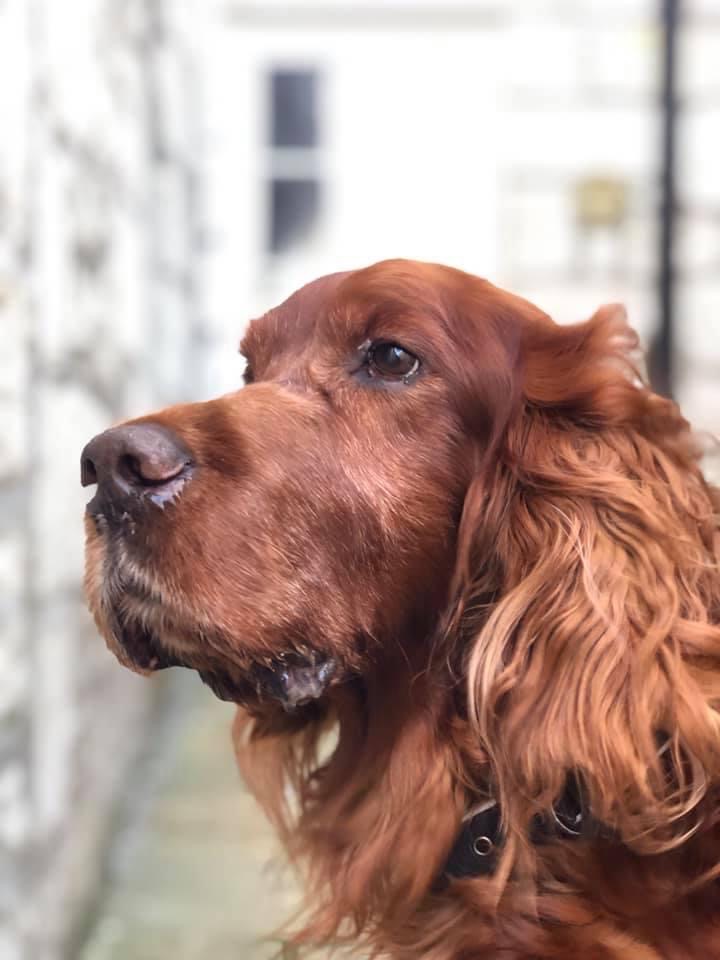
Riley – Tsitsikama Russet Flint – January 2008 – November 2019
You might find this a strange reason for spending most of my life with more than one dog, but I can’t bear the idea of being without one.
Whenever I’ve faced that hardest of days when I’ve had to say goodbye to an old friend, one comfort has been going home to the other one – the thought of an empty bed and redundant bowl, lead, collar and so on, with no happy greeting and demand for walks and attention makes me unbearably sad. The dogs make my house a home.
When I moved from Hertfordshire to Dorset, I’d recently lost my elderly Gordon Setter, so only had Whisper, a young setter-cross. A move to a new area and a new job meant that I didn’t look for another pup as we had enough going on, and the years passed as they do.
Eventually, I decided that it was high time I looked for a friend for Whisper; I knew I wanted another setter – and I heard of a litter of Irish Setter puppies available in the area so went to see them.
.
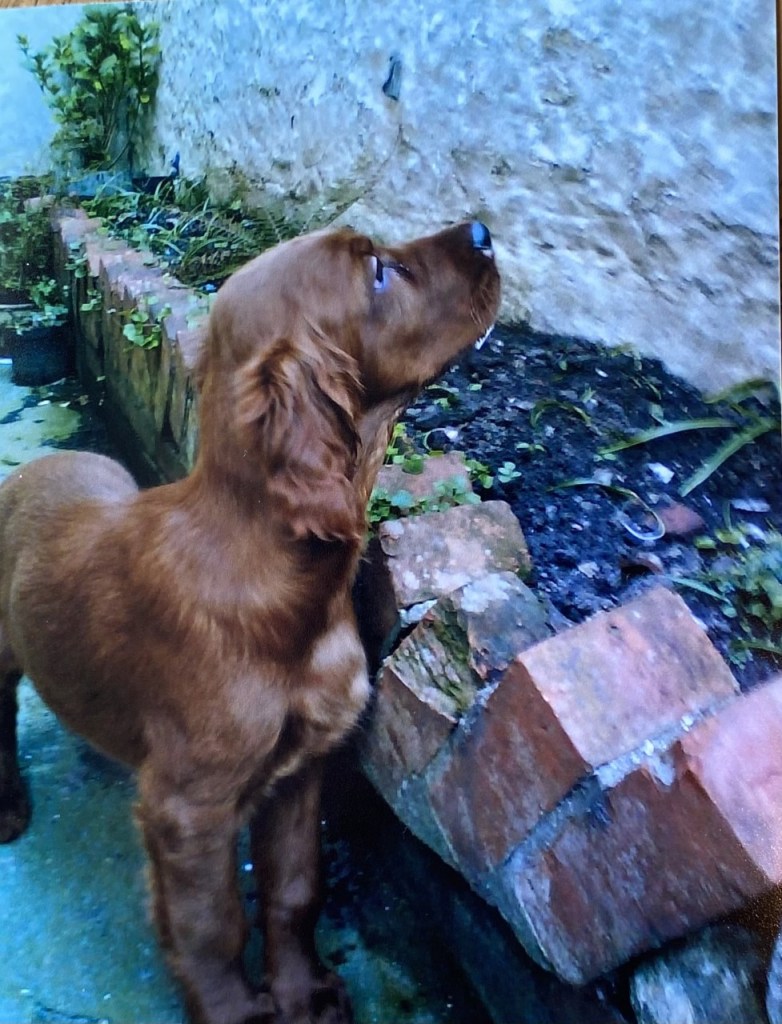
Irish Setters had been the very first breed I fell in love with, as a small child, because I’m old enough to have learned to read with the Peter and Jane series of books and Pat the dog was an Irish. I decided then and there, at about five years old, that this was the breed I wanted.
The litter we went to view were happy, healthy pups and we chose Riley, who seemed to be the most laid-back boy.
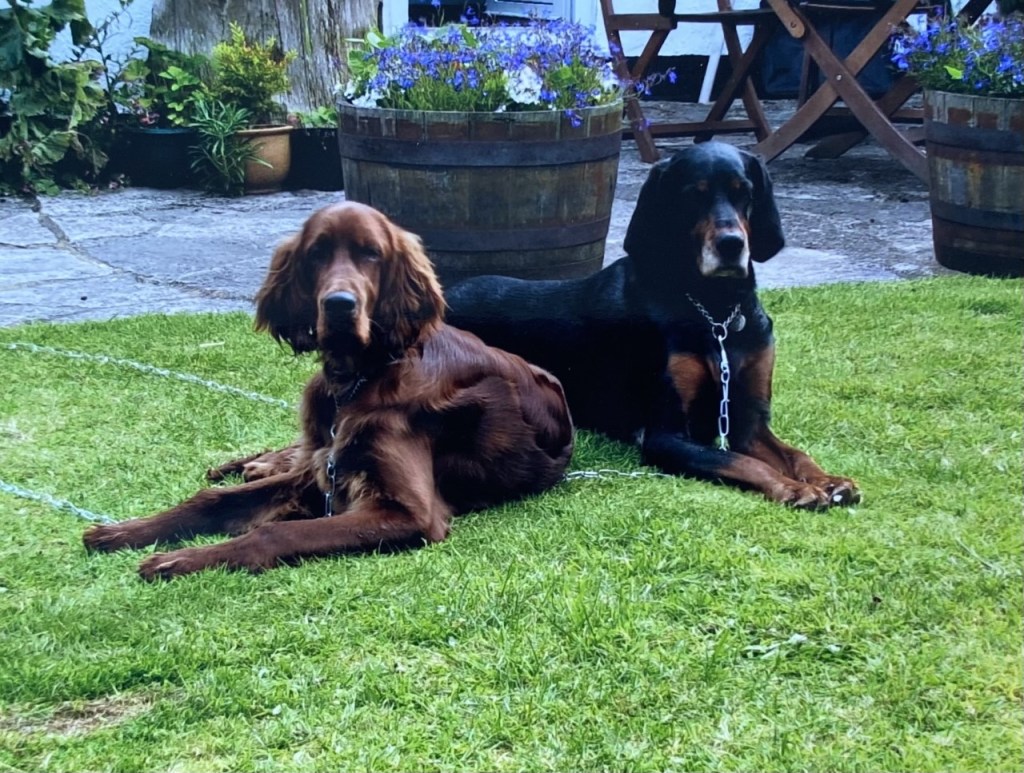
Whisper approved of her new adopted baby brother and all went well for six months – although with hindsight there were things that I should have approached differently to avoid future problems – then Whisper became ill and we lost her very suddenly. I was back to a single dog household.
What I should have done at that point – hindsight is a marvellous thing! – was taken a year or two to really work with Riley, still a puppy but an absolute nightmare on the lead.
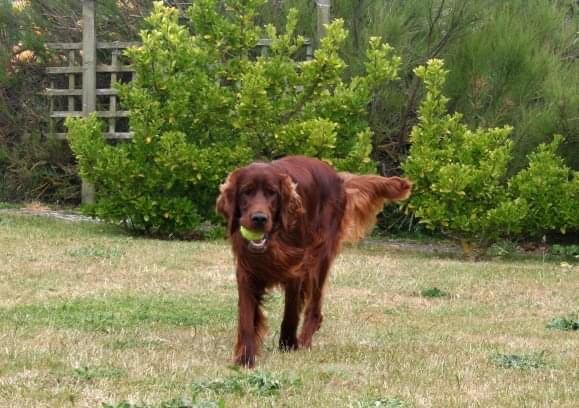
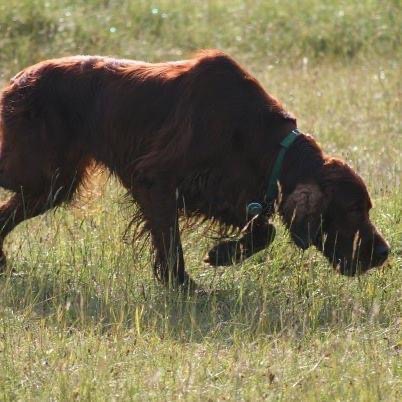
I’d had Great Danes in my twenties, but never had I encountered a dog who was so determined to pull me wherever he wanted to go at whatever speed he wished.
He also had a couple of bad experiences with other dogs who seemed to take an instant dislike to him; he wasn’t attacked, but he was frightened and that laid the foundations for dog reactivity.
I took Riley to classes and even consulted a trainer for a 1:2:1 session, but nothing really helped. I tried harnesses, slip leads, figure of 8 leads and check collars; nothing stopped him pulling like the proverbial train. It makes me sad to think that, if I knew then what I’ve learned in recent years, I could almost certainly have taught him to walk nicely without any of those harsh tools – but you don’t know until you know.
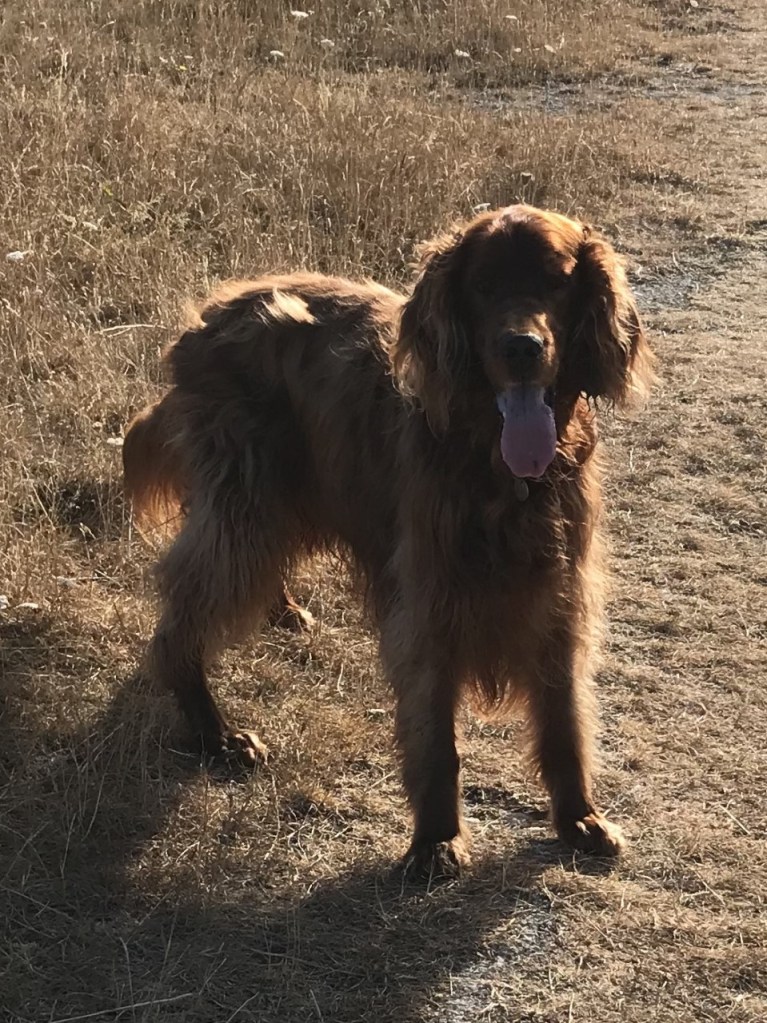
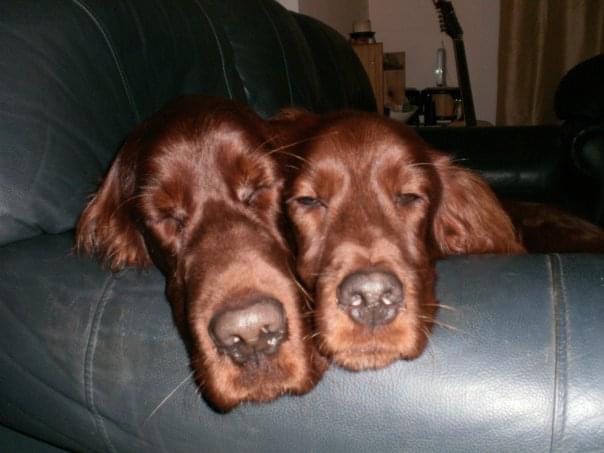
So what did I do? Yes, of course, I added another puppy! It’s so easy to see, looking back, what a crazy idea that was, but having lost Whisper so soon after Riley arrived, I was set on two dogs, so the following summer we collected Finn from Devon. Now I had a dog who was difficult to walk and a new puppy. It was very lucky indeed that Finn grew into a confident, relaxed dog with little inclination to pull, or I really would have struggled.
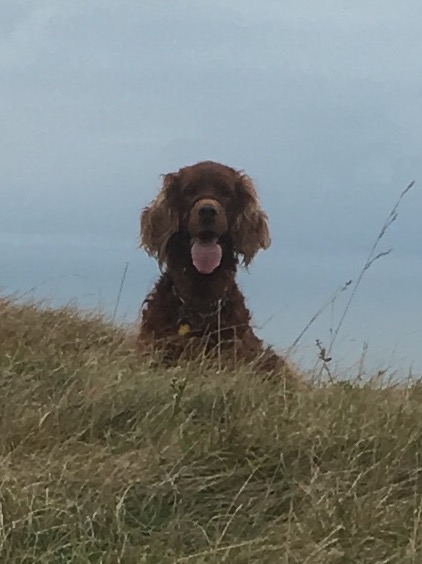
When Riley started to lunge and bark at other dogs, it became even more of a problem. If I wasn’t ready for it, I would have easily been pulled over. I became very aware of and prepared for the approach of a dog that might trigger him; that meant, of course, that I was unwittingly sending signals down the lead that there was, indeed, something Riley needed to worry about. And so began a vicious circle. I would tense in preparation, Riley would bark and lunge, I would tell him off. To my lasting shame, I was even persuaded by a trainer to use a spray collar.
Looking back now at the methods I tried makes me incredibly sad. Riley was nervous of (some, not all) other dogs, so his reaction was to bark and lunge towards them. He wanted to make them go away. I exacerbated this by tensing, so he was convinced that he was right. Then, when he reacted, he was told off or pulled back by his neck or head – so his fear of others now included the knowledge that seeing them would result in pain and fear. The more he reacted, the more he was punished. Little surprise, then, that his reactivity increased. We avoided anywhere with narrow lanes with no room to move out of the way, new routes, places where other dogs were likely to be. Walks were more often stressful than relaxing.
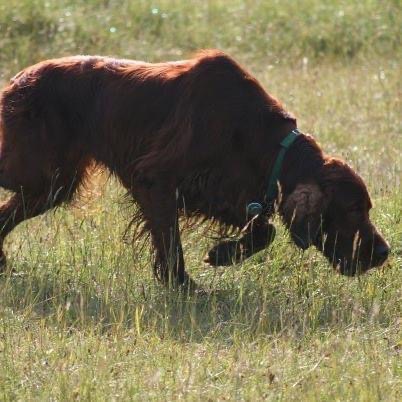
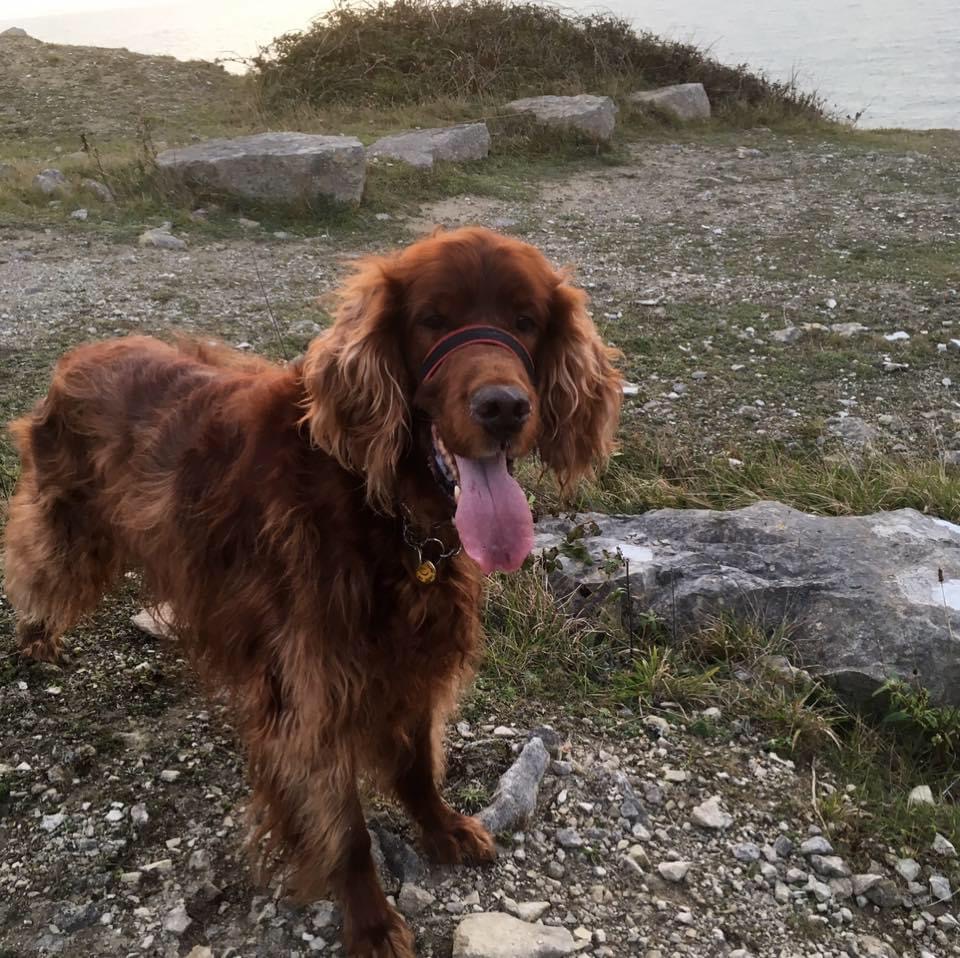
One day, having long since given up on the trainer and classes I had tried, I saw an advert for a two-session ‘Focus and Control’ workshop with Elly at Lead On Dog Shop. It was a very reasonable price and I thought I might as well give it a go. What a revelation! I went away from these sessions with some completely new ideas of how to change Riley’s emotional state around seeing other dogs and to my great relief it worked! No, it didn’t change him overnight and banish all our problems – but it did mean that I started to use positive reinforcement and counter-conditioning rather than punishment to tackle his behaviour and consequently he became a more relaxed and happier dog.
We were able to take him away on holiday, sit in pubs for meals and walk in new places without being constantly worried. I took him to Dogfest in Bristol one year and he coped with the hundreds of dogs there (I have wondered since whether I unwittingly exposed him to flooding in this instance, but I’m as certain as I can be that he coped well with it and was unfazed by the environment). Yes, I still avoided narrow paths where we might suddenly bump into dogs that might have worried him – but this was simply management and being aware of his (and my) limitations. Thanks to this one training intervention, the remainder of Riley’s life was much happier.
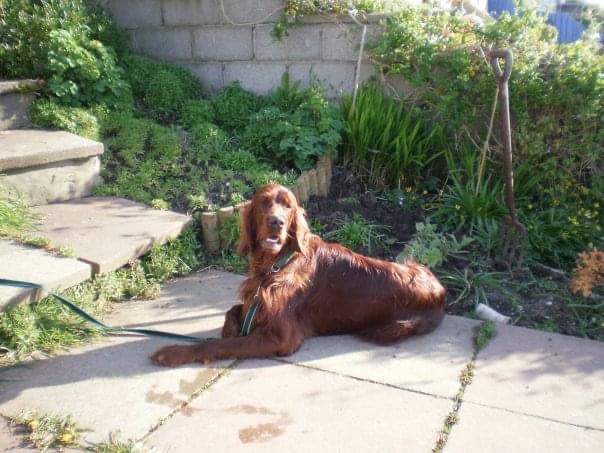
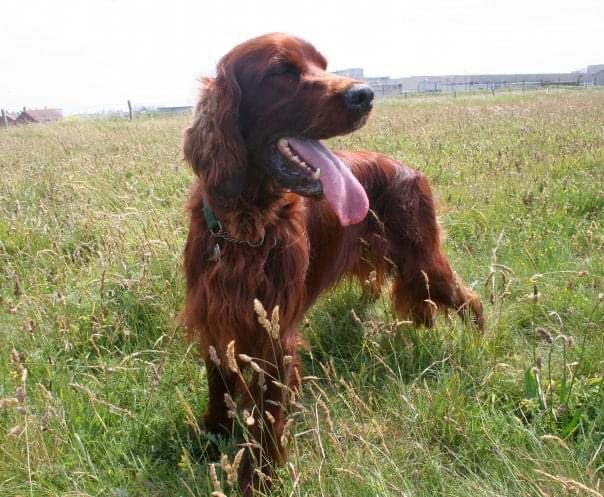
I’d like to say that this was a fairy-tale ending. But it wasn’t, not entirely. Remember I said that Riley pulled like a train, despite every tactic I tried? Well, at around the age of 8, he developed hyperthyroidism, then MMM (masticatory muscle myositis); by 10, he was diagnosed with ME (Megaoesophagus) and needed feeding blended food in a Bailey Chair with time spent upright after meals. ME causes food and drink to become trapped in the oesophagus then aspirated into the lungs, leading to AP (aspiration pneumonia).
Although we managed his disease fairly well for a couple of years and he was able to enjoy life in many ways, sadly an episode of pneumonia shortly before his twelfth birthday was too much for him and we had to let him go.
I’m not just telling you this to make you sad. Riley has become my biggest motivation in teaching loose lead walking in my classes and 1:2:1 sessions, because it’s entirely likely that years of pulling on a collar contributed to his conditions. It might, of course, be coincidental, but the neck and throat of a dog contain such important structures – the trachea, oesophagus, larynx, thyroid, for example – that can be damaged by persistent pressure and jerking of collars or slip leads, that it seems likely to have been a factor.

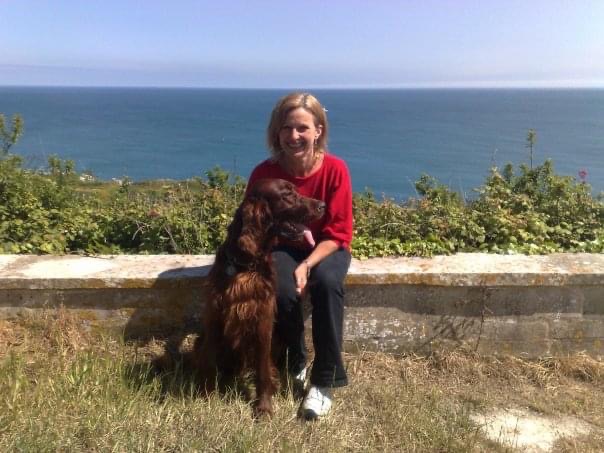
I can’t make things right for my big ginger boy, heart-breaking though it is to know that I am confident I could have taught him to walk with a loose lead if I had my chance again now, but at least I can try to prevent this sort of damage arising in others. So my beautiful boy has left a wonderful legacy – good lad!
 Homefield K9 Training