Sonnet – life with an anxious dog
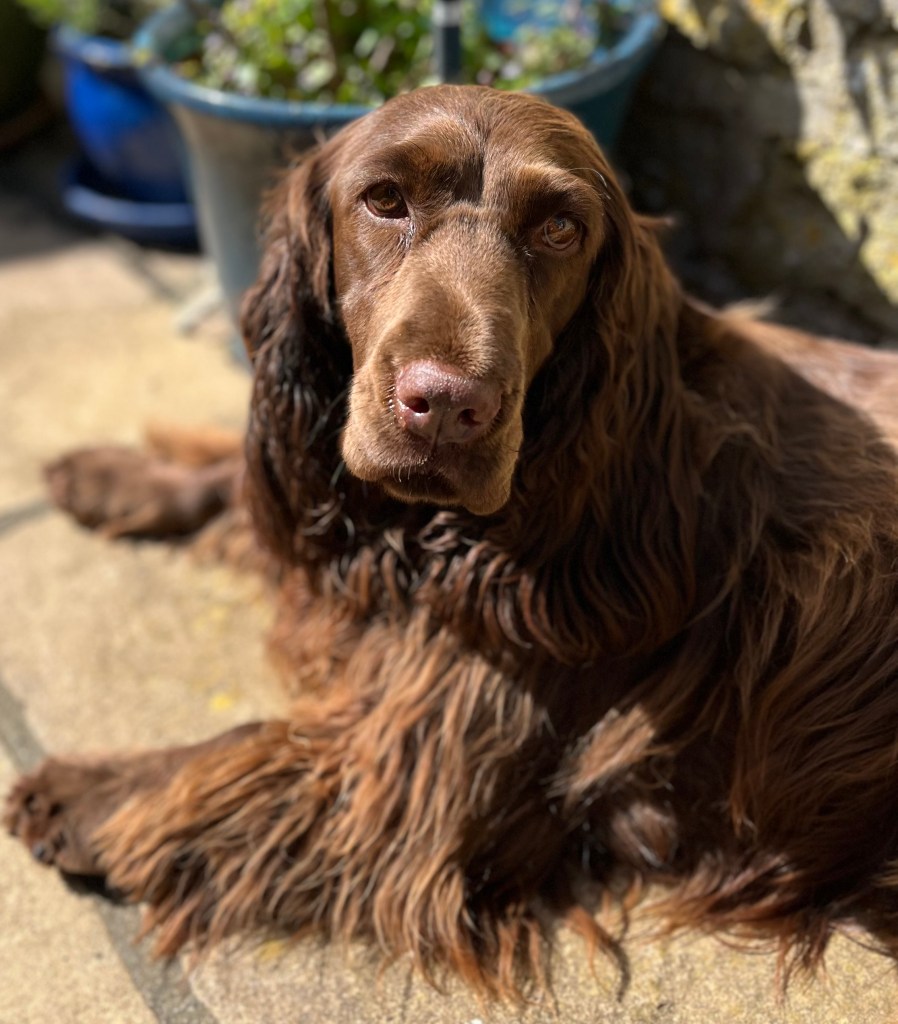
Most of my posts over the last year have focused on Ember, as I’ve shared the trials and tribulations of raising a setter puppy (alongside the joys, of course!) And of course, lots of you know of my first Field Spaniel, Lyric, and the pain of losing her so young to a brain tumour. But it’s probably high time that I wrote a bit about Sonnet, the literal face of Homefield, since my talented artistic friend’s drawing of her head became my logo.
I chose the name before I chose her – then I heard that a Field Spaniel called Poet was having a litter sired by a dog whose kennel name was Dead Ringer for Love: add in the fact that I’ve always been a fan of Meatloaf, and it felt that Fate was sending her to me, my very own little love poem!

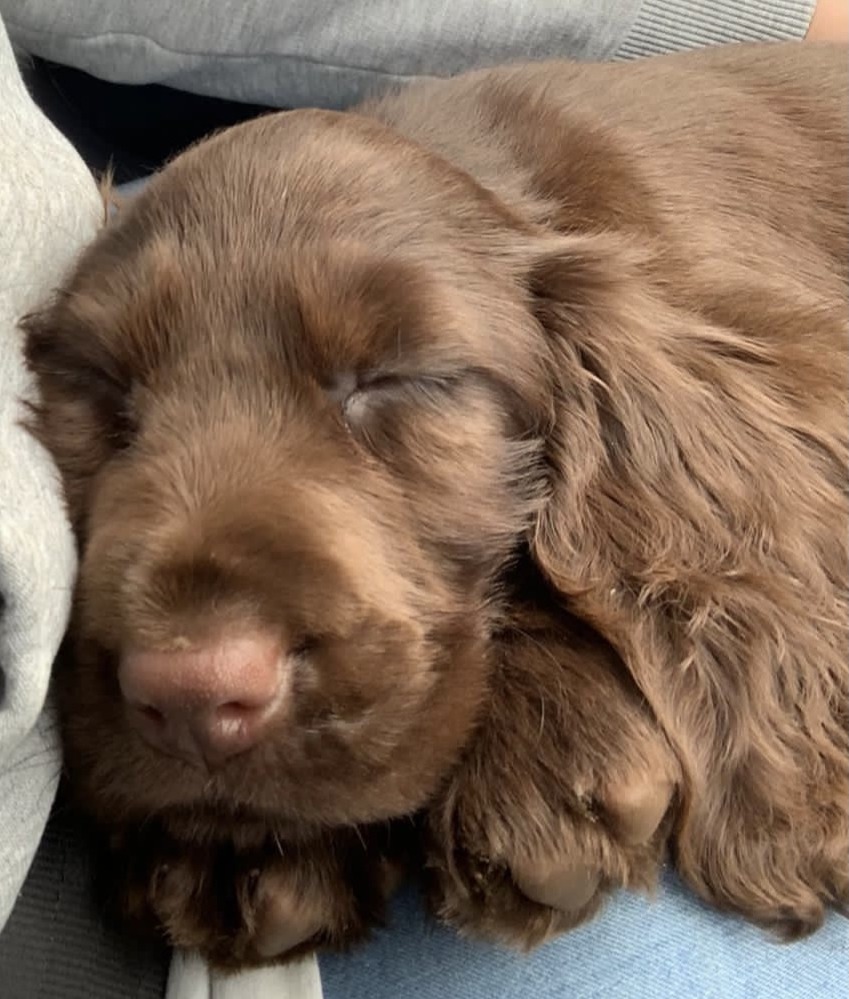
Sonnet is, in many ways, an easy dog – she’s quiet and friendly, usually well-mannered around other dogs (although she does get weirdly irritated by females that rush up to her and throw themselves on their backs – it makes her really cross!) and because Lyric had so many challenges, Sonnet often seemed to get overlooked. Sort of middle child syndrome. I took her to a number of different activities, and she quite enjoyed them to start with but would then seem to lose interest.
I showed her a couple of times, but unfortunately she has a wry mouth (her teeth are badly aligned, so she doesn’t have a straight scissor bite) so that was a non-starter.
She is almost impossible to photograph looking happy! She has a ‘Resting Battersea Face’ and looks permanently sad – but that’s just her. She’s a serious little thing who considers every move, unlike Ember who cannonballs through life like a hurricane; risk assessments are a vital part of Sonnet’s personality!
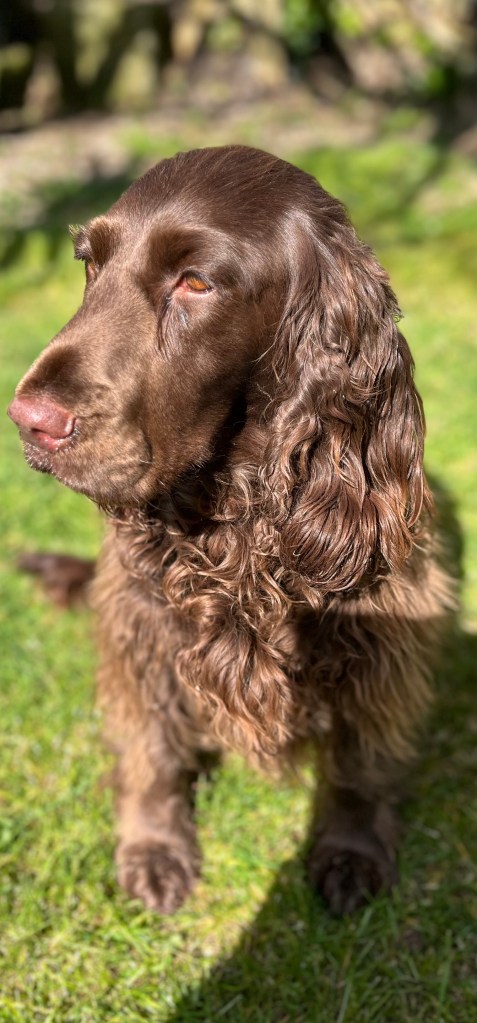
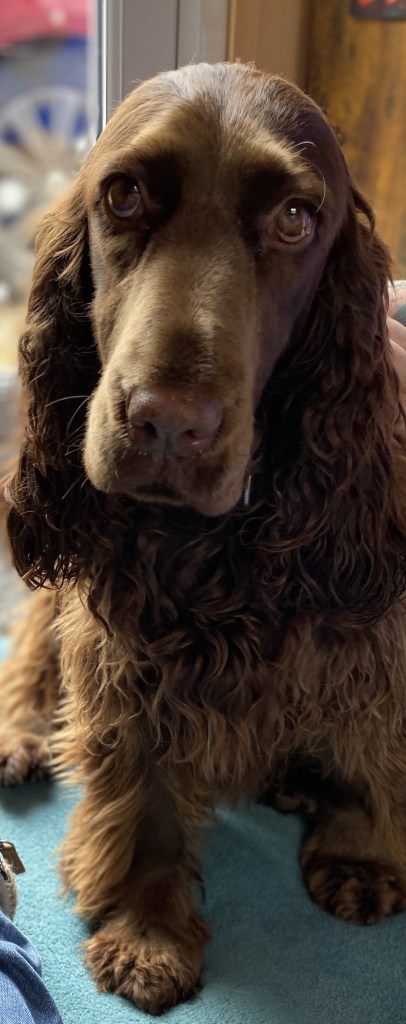
The fact is that Sonnet is a classic lockdown pup. Although the worst of it was over by the time she joined us in December 2020, we didn’t have many visitors and people were still keeping their distance. The lack of quality socialisation can have a more wide-reaching effect than might seem logical. Add to this the fact that, soon after bringing her home, she had to stay with my daughter for a few weeks while I recovered from an operation, and I guess it’s not surprising that Sonnet is an anxious little dog. Not, I hasten to add, that she wasn’t wonderfully cared for by my daughter’s family – she absolutely was – but the sheer number of changes in her short life meant that a secure attachment was not as easy to achieve.
Van doors being slammed, front doors opening as we walk past, people trying to greet her on walks, visitors to the house other than well-known members of the family, large boxes being delivered – I could go on. It’s not like I can desensitise her to many of these – if I open the freezer door when she’s in the crate next to it, she will leave the room. Nothing bad has ever happened when I’ve opened the freezer door, in the entire four years of her life; she just hates it.
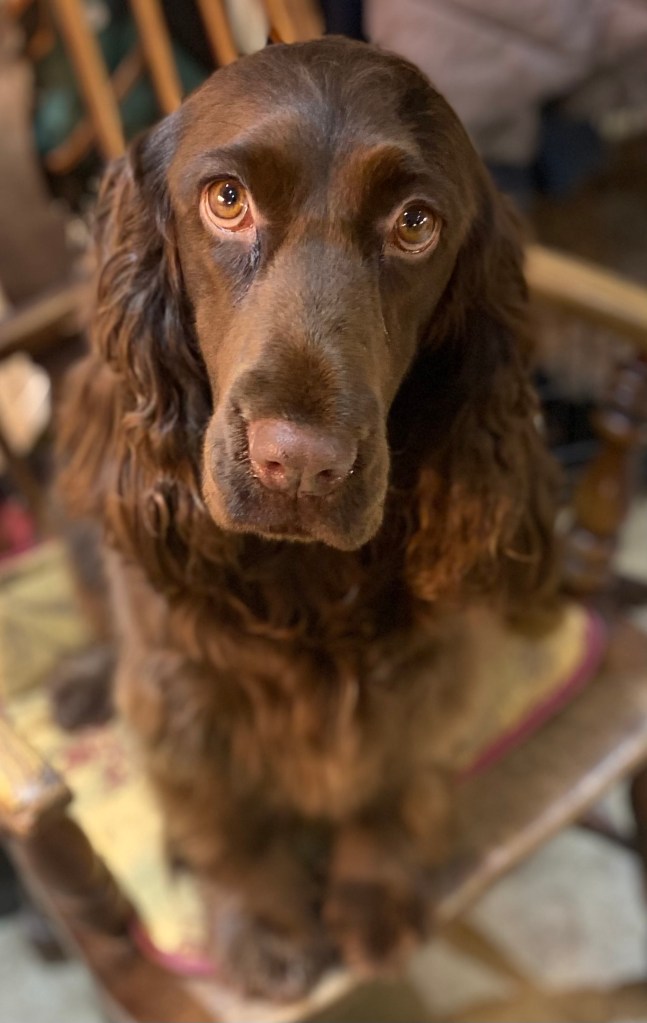
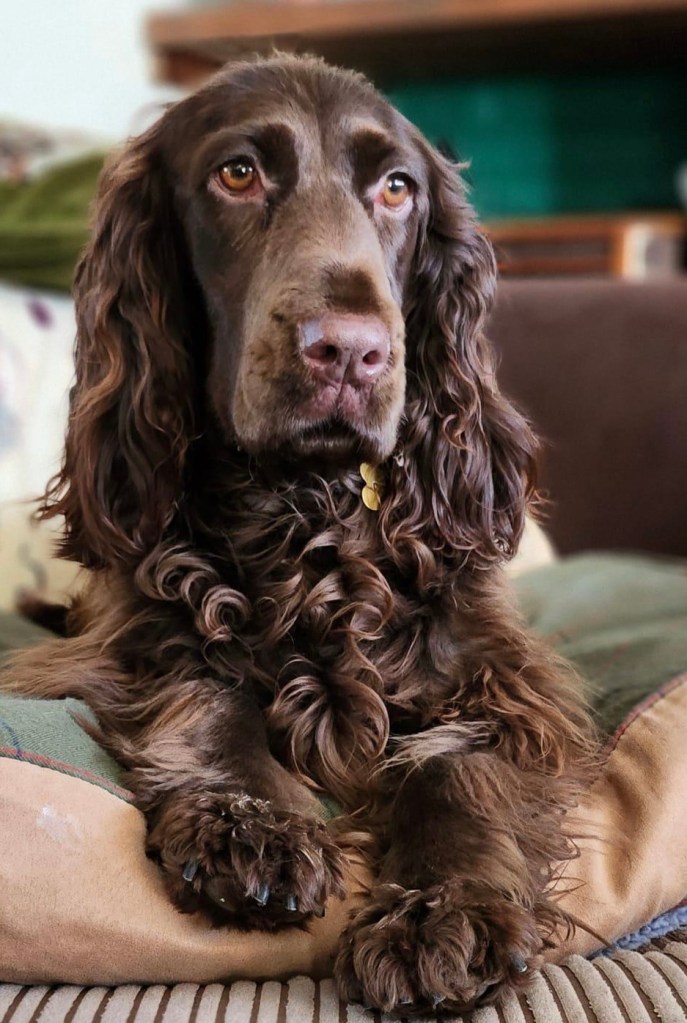
The Oxford dictionary defines anxiety as ‘a feeling of worry, nervousness or unease about something with an uncertain outcome’ and this is exactly the point: Sonnet is worried. Just because no van door ever harmed her, in her mind it doesn’t mean that it won’t. It’s partly sound sensitivity – any loud noises make her fearful and she is a dog who chooses flight in any scary situation. If she were human, perhaps I could sit her down and talk through her fears; but, let’s face it, many people struggle with anxiety throughout their lives despite the ability to understand explanations. How much harder must it be for a dog?
What’s important for her is that I try not to put her in positions that make her uncomfortable. If people she doesn’t know well call round, she takes herself off to hide in a crate and that’s fine – she doesn’t have to say hello. If I need to move furniture or anything unfamiliar arrives, I make sure she can leave the room if she wants to.
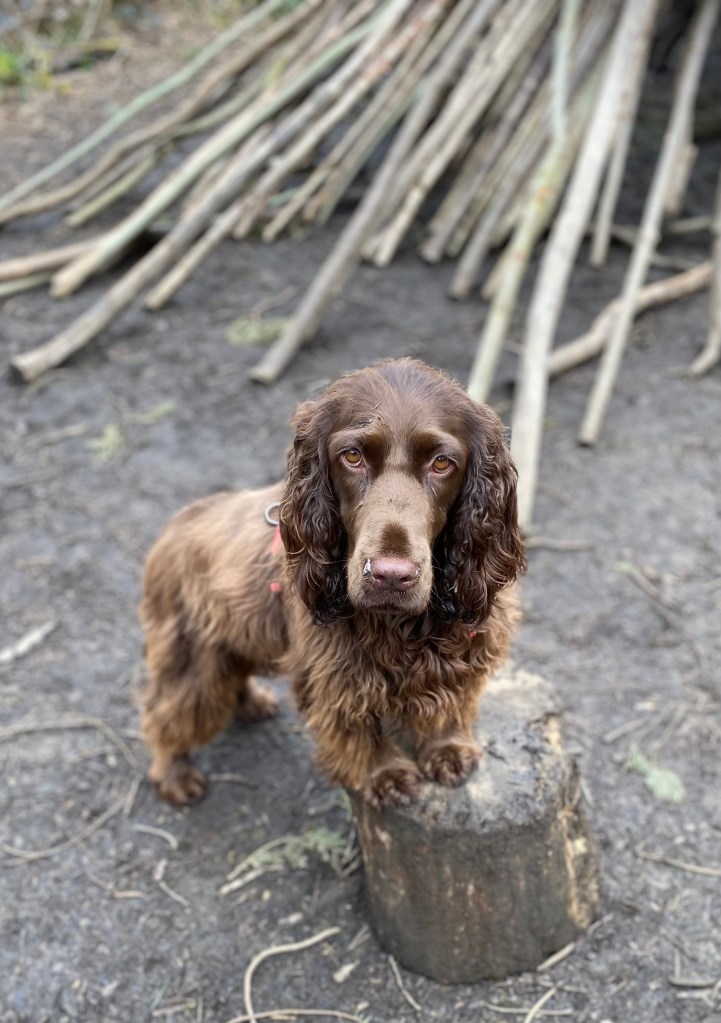
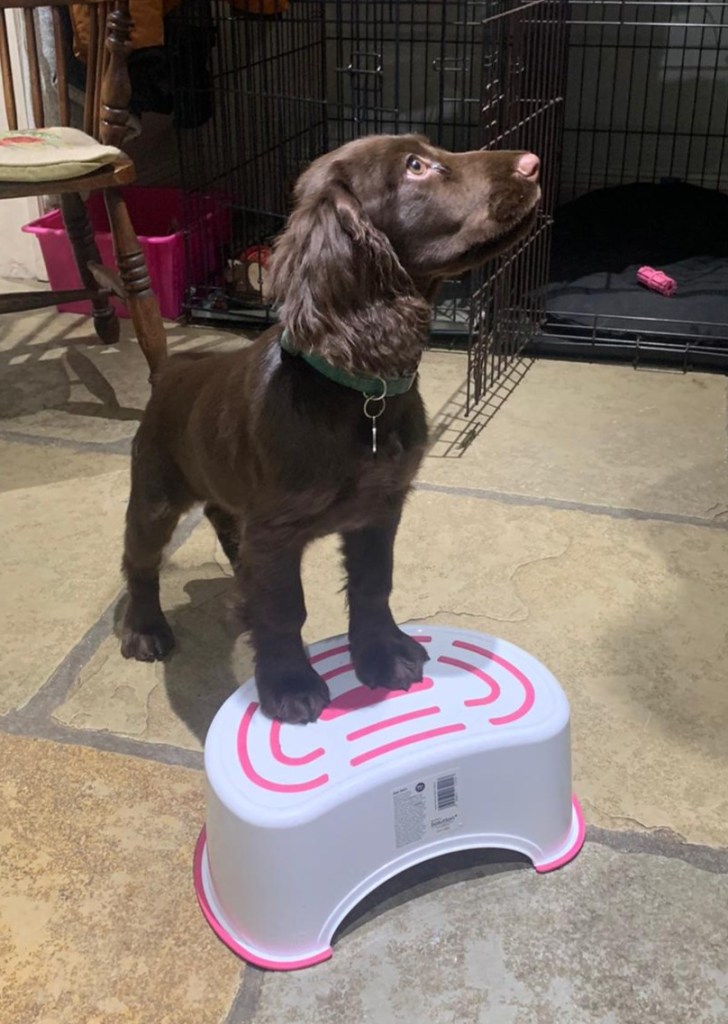
Even meeting my new baby granddaughter has been a slow process – she took one sniff and legged it on the first visit. Three or four encounters with no pressure have seen her reach the point where she’s happy to sniff the baby then ignore her (the ideal outcome, I don’t want either of the dogs to be too interested).
Sonnet always wants to be close to me – but not too close! She’s not a cuddler, she will sit at the far end of the sofa in the evenings and if I sit next to her, there’s every likelihood that she’ll immediately go elsewhere. But for all that, she is hugely affectionate in her own way, and loves any training games. She is also calm enough to be a brilliant helper dog for me from time to time in 121 sessions.
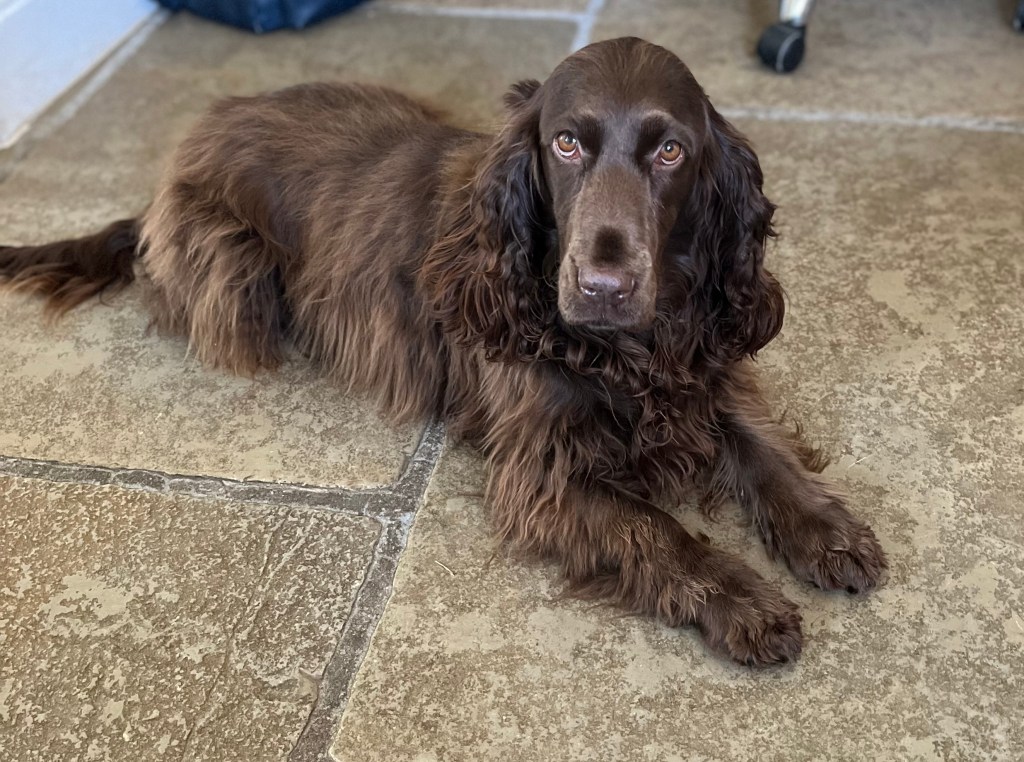
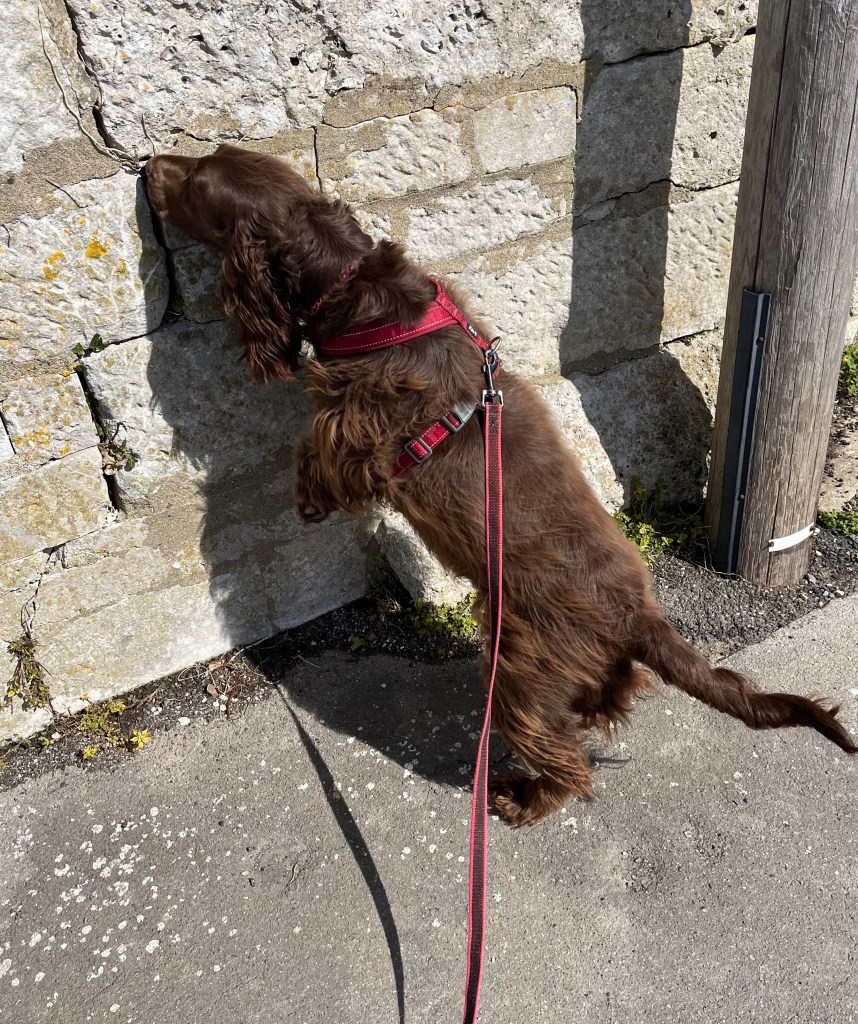
Her favourite thing in the world, though, is Scent Work; it makes me ridiculously happy watching her light up on a search! She goes to classes where nobody would believe what I’ve just said about her being uncomfortable around people – she loves everyone and greets them with the classic salsa-dance spaniel whole-body tail wag. Although there are times when she gets distracted, she can be super-focused on finding the scent and put her heart and soul into searching.
In many ways, as I said earlier, Sonnet is a very easy dog – but it’s slightly harder to be certain that I’m making her life as safe, happy and fulfilled as it could and should be. Building confidence is an ongoing project for her, but other than that goal, I wouldn’t change her for the world. If you have an anxious dog, you’ll know what I mean!
 Homefield K9 Training